
US President Joe Biden and his Chinese counterpart Xi Jinping on Monday held their first in-person meeting in Bali, with both leaders underscoring the need to manage their differences and prevent a conflict, amid Beijing's coercive military posturing against Taiwan and in the strategic Indo-Pacific region.
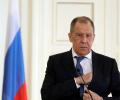
Russian Foreign Minister Sergey Lavrov will be on a two-day official visit to India from Thursday, his first trip to the country since Moscow launched its invasion of Ukraine last month.
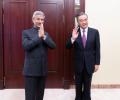
External affairs minister S Jaishankar has told his Chinese counterpart Wang Yi that the two sides should work for an early resolution of the remaining issues along the LAC in eastern Ladakh to restore peace and tranquility in the border areas as this has been an essential basis for progress in Sino-India ties.

The disengagement process from both the north and south banks of Pangong Lake was completed by the two nations and further disengagement is underway at other friction points.
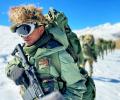
The United States will continue to support India with equipment and other things it needs along the Line of Actual Control (LAC) with China, a top American admiral has told lawmakers, asserting that Washington and New Delhi share a 'tremendous partnership'.

It was the second time in the last three days that India asserted that the relationship with China depends on the resolution of the pending issues in eastern Ladakh.
Kurt Campbell, the White House Asia Coordinator, said that in his view India is the most important bilateral relationship for the United States in the 21st century.
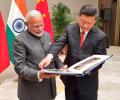
'Xi's meeting with Modi in the southern Indian city of Chennai on Friday and Saturday is expected to focus more on the two countries' historical and present differences, and how to move beyond them to realise their cooperation potential'

The talks will focus on 'delimitation of the border, boundary management and a host of bilateral and international issues'.
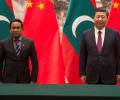
Chinese Foreign Ministry said international community should respect sovereignty and independence of the Maldives.

Welcoming Jaishankar, Foreign Minister Wang referred to the Indo-Pak tensions without directly mentioning about India scrapping the Article 370 of the Constitution that gave special status to Jammu and Kashmir.

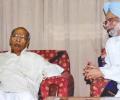
'Narasimha Rao asked me why China was doing so well in attracting foreign investments and I gave my frank opinion.' 'I told him that giving thrust to exports had to be a national effort.' 'But in India, the system was very centralised in the Government of India and the state governments had no role to play.'
During their hour-long in-person meeting on the sidelines of a Shanghai Cooperation Organisation (SCO) conclave in Dushanbe on Wednesday, External Affairs Minister S Jaishankar also told his Chinese counterpart and State Councilor Wang Yi that any unilateral change in the status quo along the Line of Actual Control (LAC) was 'not acceptable' to India and that the overall ties can only develop after full restoration of peace and tranquillity in eastern Ladakh.

The focus of the talks will be to ensure mutual development and expanding overall ties, diplomatic sources said.

On Monday China said it has "effectively managed and controlled" frictions in certain border areas.
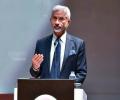
We very much hope that wisdom dawns on the Chinese side, Jaishankar said in Bangkok.

National Security Advisor Shivshankar Menon on Monday held talks in Beijing with senior Chinese diplomat and his counterpart for the boundary negotiations Dai Bingguo and discussed wide-ranging bilateral issues.

'Pakistan's military leaders have to accept that the policy of proxy wars has damaged Pakistan more than it has damaged the enemy,' says former R&AW chief Vikram Sood.

China on Tuesday said the activities of its high-tech research vessel will not affect the security of any country and should not be 'obstructed' by any 'third party', as the ship berthed at Sri Lanka's strategic southern port of Hambantota amid Indian and United States concerns.

The Ministry of External Affairs (MEA) spokesperson Anurag Srivastava said complete disengagement requires re-deployment of troops by each side towards their regular posts on their respective sides of the Line of Actual Control(LAC) and this can be done only through mutually agreed actions.

Taiwan's Ministry of National Defense said 30 Chinese warplanes made incursions into its air defense identification zone, or ADIZ, the highest daily figure in more than four months.

In the past, India strongly rejected references made to Jammu and Kashmir in a previous joint statement by Pakistan and China.

"This Friday in Vienna a plenary session of the NSG will be held. Our position is subject to no change as of date," China said.

Closed meetings are not open to the public and no verbatim record of statements is kept.
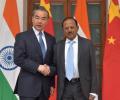
'Both sides had candid and in-depth discussions over easing the current border situation and reached positive common understandings,' it said. 'Both sides welcomed the progress achieved in the recent military and diplomatic meetings, agreed to stay in dialogue and consultation, and stressed the importance to promptly act on the consensus reached in the commander-level talks between Chinese and Indian border troops, and complete disengagement of the front-line troops as soon as possible,' it said.
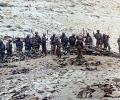
India on Thursday blamed China's actions of amassing a large number of troops close to the border and attempts to unilaterally alter the status quo along the Line of Actual Control (LAC) last year for the continuing military standoff in eastern Ladakh, and asserted that these acts were in violation of Sino-India bilateral agreements.
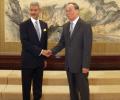
"Our relationship is so big that it is no longer a bilateral relationship. It has global dimensions," the report quoted Jaishankar as saying.

India shifted gears in rejuvenating strategic ties with its major partners like the US and Russia and focused on drumming up global support for its distinct strategy in the Indo-Pacific to check Beijing's increasing muscle-flexing in the region.
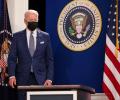
In January last year, the US signed the first phase of the trade deal with China, which former President Donald Trump described as historic, concluding more than a year of tough negotiations including several months of suspension of talks between the two largest economies of the world.

Colombo seems to be veering to the middle path between China and the US on global matters, but in regional matters of strategic security, it is increasingly identifying with India, points out N Sathiya Moorthy.
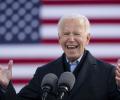
The Chinese side hopes that the next US administration will return to a sensible approach, resume dialogue with China, restore normalcy to the bilateral relations and restart cooperation, Wang, who is also a state councillor, told the state-run Xinhua news agency in an interview.

The official told the reporters during a conference call on Friday, ahead of the next week's 2+2 India-US Ministerial in New Delhi, that the Trump administration was providing support to India through defence sales, joint military exercises and information sharing.
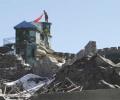
The 16th round of India-China border talks will be held in Beijing on June 28 followed by the visit of Defence Minister A K Antony a week later as the two countries are set to resume top level contacts to build on the recent visit of Chinese Premier Li Keqiang to New Delhi.

Jaishankar, who arrived in Santo Domingo on his first official visit to the Dominican Republic, also said that India has seen a dramatic expansion in connectivity, contacts, and cooperation across the region.

China is going to be an indispensable partner in Russia's ongoing crisis with the US, while on its part, China cannot remain indifferent if Russia gets crushed by the US, lest it loses 'strategic depth', observes Ambassador M K Bhadrakumar.

US Vice President Kamala Harris would host a separate meeting with the prime ministers of three Quad countries -- India, Australia and Japan -- at the White House to discuss with them the important factors for democracies to go forward, officials said.

India has been maintaining that China has no locus standi in commenting on Jammu and Kashmir.

I look forward to many years of success and friendship, working together to solve not only our problems, but world problems and problems of great danger and security, says President Trump in Beijing.
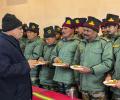
Singh and Esper also deliberated on ways to further boost bilateral defence and security cooperation, they said, adding the telephonic conversation took place at the request of the US side.
